
Expensive home repairs before selling in Rochester NY can involve the roof, foundation, plumbing, heating system, or electrical system. Before approving a replacement, find out what has actually failed, what the complete repair includes, and how the condition affects your sale. A large estimate deserves a clear explanation.
I’m Brett Iwanowicz, owner of Brett Buys Roc Houses LLC. My more than 15 years of real estate experience include buying and renovating homes. When reviewing a property, I want to understand the work behind the number before deciding what to do with it.
The key question is whether you are dealing with a limited repair, a larger system replacement, or an unresolved problem that needs further evaluation.
Why the visible repair may be only part of the project
Replacing damaged material is sometimes one piece of the job. Getting access, removing old components, correcting the cause, and restoring the surrounding area can add work that was not included in an initial estimate.
A plumbing quote might cover replacing a pipe while excluding the wall repair afterward. A roof proposal might price new shingles but leave damaged wood as an additional charge. Those exclusions are not automatically unreasonable. You need to understand them before committing your money.
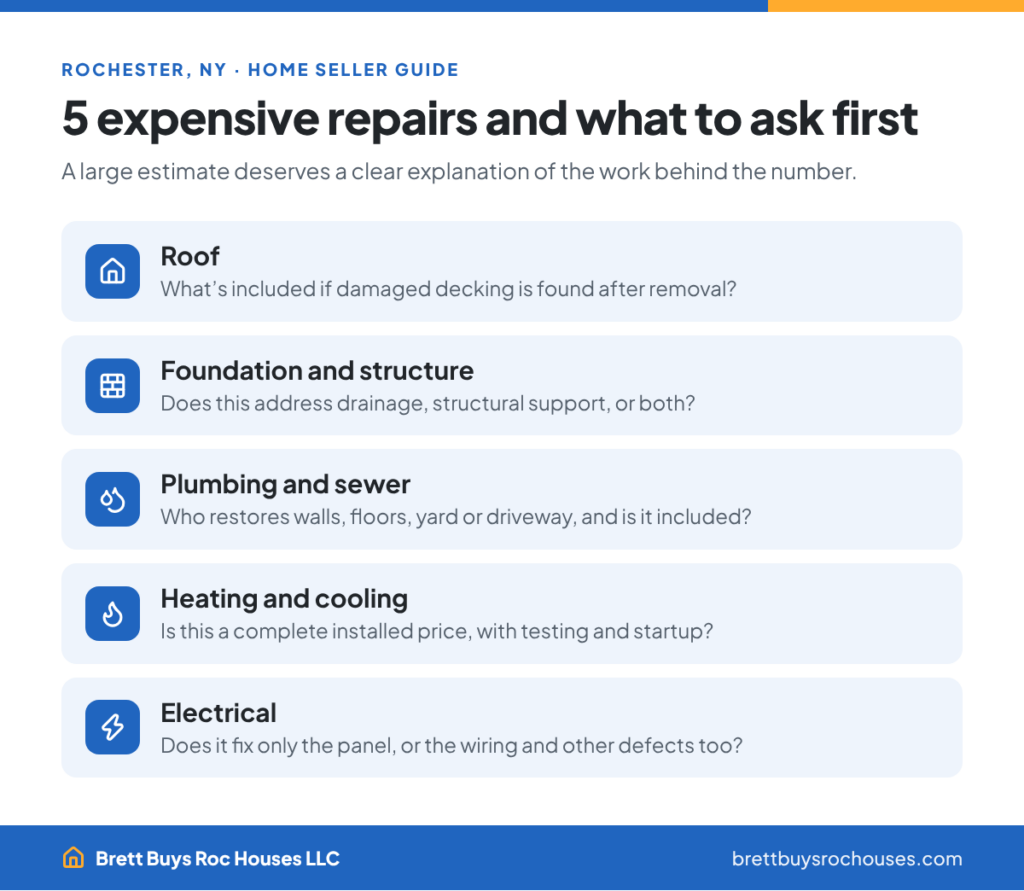
Use the five categories below to ask better questions. The list is not a fixed ranking by cost; the extent of the problem and the property itself determine the budget.
1. Roof repairs that extend beyond shingles
A roof project can include removal of existing materials, repairs to the wood underneath, flashing around roof openings, ventilation work, and disposal. A proposal describing only the new roof covering may leave important items unresolved.
Ask a qualified roofer to explain where the problem is, whether a localized repair is practical, and what supports a recommendation for replacement. A ceiling stain alone does not establish that the entire roof must be replaced.
Before approving the work, ask: What is included if damaged decking is found after removal, how will it be priced, and when will you be notified?
Also confirm whether the proposal covers all roof areas and what warranty applies to the work. Keep the assessment and completed repair records so you can explain the condition to a prospective buyer.
2. Foundation and structural repairs that need a defined solution
Foundation concerns can involve different problems, including water entry, movement, or deteriorated materials. They should not all lead to the same repair proposal.
If an inspection identifies bowing walls, significant movement, or questions about structural support, consider an evaluation by a qualified structural engineer before committing to a major repair. Ask what additional investigation is needed and whether the recommended work requires a design.
Before approving the work, ask: Does this proposal address drainage, structural support, or both, and what problem will remain afterward?
An estimate should identify the affected area and any access or restoration work. Do not assume a surface coating, crack repair, or drainage project also resolves a structural issue unless the professional assessment supports that conclusion.
3. Plumbing and sewer repairs with access and restoration costs
An isolated fixture leak is a different project from replacing concealed supply lines or repairing an underground sewer line. Ask a plumber to establish the affected component and explain the proposed work.
Where an underground line is involved, ask whether a camera inspection or other investigation would clarify the location and extent of the problem. Confirm which portion is your responsibility with the appropriate utility or municipality.
Before approving the work, ask: Who restores the walls, floors, yard, or driveway after access and repair, and is that cost included?
Separate the pipe repair from any damage already caused by a leak. A plumbing contractor’s estimate may not include drying, cleanup, or replacement of affected finishes. Our guide to selling a house with water damage covers that related situation in more detail.
4. Heating and cooling replacements with installation requirements
A furnace, boiler, or air conditioner should be evaluated on its condition and operation. Age is useful background, but it does not establish the exact repair needed.
Have a qualified heating and cooling contractor explain whether the issue can be repaired and what a replacement would involve. Ask about equipment selection, venting, electrical connections, controls, and any related work required for the proposed installation.
Before approving the work, ask: Is this a complete installed price, and what testing, startup, and documentation will be provided?
If you are preparing to sell during Rochester’s colder months, confirm scheduling before promising that heating work will be complete by a particular date. Have any suspected safety defect assessed promptly rather than treating it as a future negotiation item.
5. Electrical repairs that involve more than a panel
A panel replacement and a broader wiring project are different jobs. An electrician should explain what is defective, which components need correction, and whether the proposed work addresses the identified concern.
Ask about permits, utility coordination where necessary, circuits included in the work, and access through finished areas. Electrical work can also leave drywall or other surfaces needing restoration.
Before approving the work, ask: Does this estimate correct only the panel issue, or does it include the wiring and other defects identified during evaluation?
Do not assume an older house needs complete rewiring solely because of its age. Get a property-specific assessment, and leave inspection and repair of electrical equipment to qualified professionals.
Decide what the repair must accomplish for your sale
Once you understand the condition, identify why you would spend the money now.
- Protect the property or address a safety concern. Ask the relevant professional what needs immediate attention and what can be planned separately.
- Meet an agreed sale requirement. If you are under contract, have your agent and attorney confirm exactly what you agreed to repair and how completion will be documented.
- Address a financing condition. Ask what the buyer’s lender requires before substituting a price reduction or credit for completed work.
- Leave the work for the next owner. If you will not undertake the project, disclose the known condition and discuss a sale that accounts for the remaining work.
Condition can affect financing. Fannie Mae’s property condition guidance distinguishes minor issues from defects affecting safety, soundness, or structural integrity. A credit does not automatically satisfy a required repair. The lender must confirm what is acceptable for the specific loan.
If your broader question is whether remodeling would add enough value, our article on when renovating before selling may not make sense addresses that separate decision.
A hypothetical roof estimate that changes after the scope is clarified
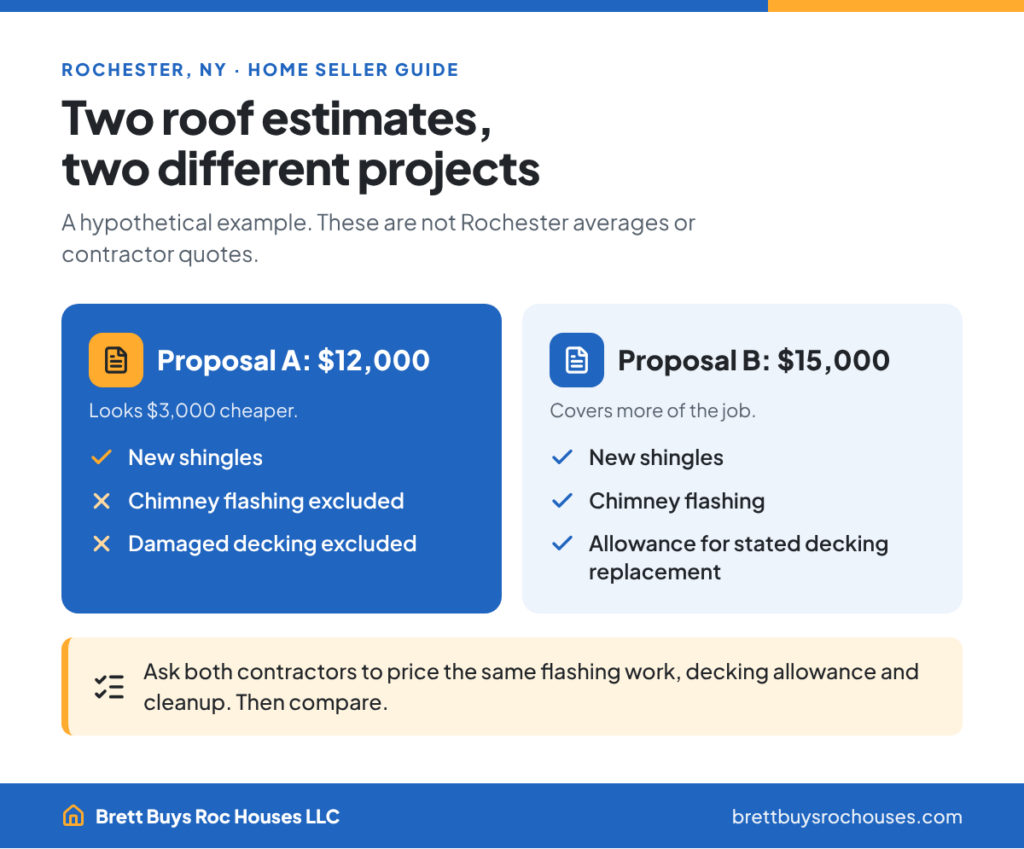
Imagine a Rochester homeowner receives two roof proposals. One is $12,000 and the other is $15,000. These are illustrative figures, not Rochester market averages or contractor quotes.
The first includes new shingles but excludes chimney flashing and any damaged decking. The second includes chimney flashing and an allowance for a stated amount of decking replacement. The proposals also describe different cleanup responsibilities.
The homeowner cannot yet conclude that the first contractor will complete the same project for $3,000 less. They ask both contractors to price the same flashing work, define the decking allowance and additional unit price, and include removal and cleanup.
The result is a set of estimates the homeowner can compare on a consistent basis. Neither the lowest nor the highest initial price proves which contractor is the right choice. References, insurance, workmanship, scheduling, and the final written agreement still matter.
Common mistakes when facing a large repair estimate
Choosing a bid before checking exclusions
Read what is left out as carefully as what is included. An allowance is a defined budget or quantity within the proposal; it is not necessarily a promise that all related work is covered.
Letting the project expand without a new decision
If additional work is discovered, request the reason, price, and schedule impact in writing. Understand whether it is needed to complete the repair or is an optional improvement before authorizing it.
Treating a planned repair as a completed repair
A contractor’s start date does not mean the work will be finished before photographs, an inspection, or closing. Keep your agent informed and avoid describing a system as replaced until the work is actually complete.
Assuming a repair erases the need to disclose its history
Answer applicable disclosure questions accurately based on your actual knowledge. The New York Property Condition Disclosure Statement asks about known conditions and is not a warranty or a substitute for inspection. Your attorney can confirm the requirements and any exemptions for your sale.
Five things to get in writing before you commit
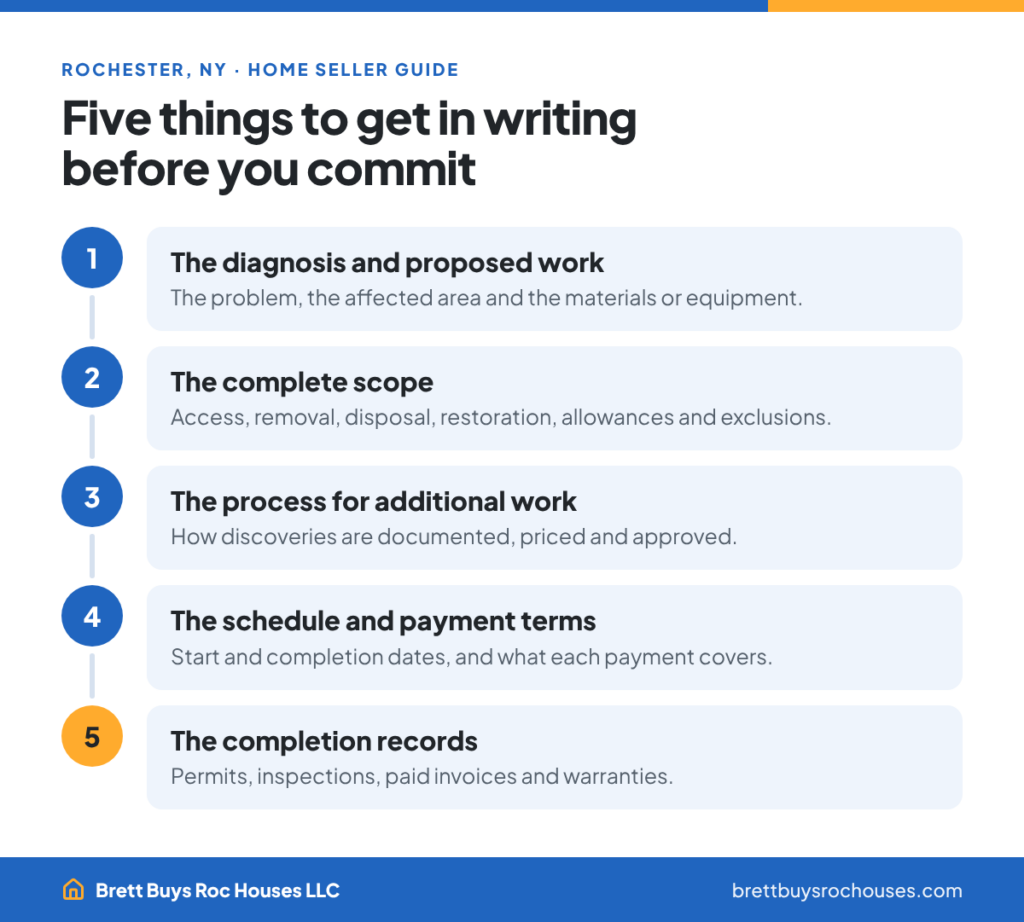
- The diagnosis and proposed work. Identify the problem, the affected area, and the materials or equipment to be used.
- The complete scope. Include access, removal, disposal, restoration, allowances, and exclusions.
- The process for additional work. State how discoveries will be documented, priced, and approved.
- The schedule and payment terms. Confirm expected start and completion dates and what each payment covers.
- The completion records. Identify required permits and inspections, paid invoices, warranties, and any transferable coverage.
The New York Attorney General’s contractor guidance recommends comparing written estimates, checking references and insurance, and confirming permits with the local building department. It also advises against paying the full price upfront. Use those checks before making a deposit.
Questions about expensive repairs before selling
What is the most expensive repair when selling a house
There is no universal answer. Major structural work or replacement of a roof, plumbing, heating, or electrical system can create a substantial project. Get an assessment of your property and a complete scope before treating an online price as your budget.
Should I replace an old furnace before listing
Get its condition and operation evaluated first. Age alone is not a diagnosis. Consider the professional findings and any actual sale or financing requirements before approving replacement.
Can I offer a buyer a repair credit instead of doing the work
Sometimes, if the parties agree and the financing permits it. A credit may not resolve a lender’s required repairs. Have your agent, attorney, and the buyer’s lender confirm the arrangement before you rely on it.
How should I compare two very different repair estimates
Ask both contractors to price the same work and identify their exclusions. Compare materials, allowances, restoration, timing, payment terms, and warranties. A lower starting price may cover a smaller project.
Talk through the property before taking on a major project
You may decide to complete a well-defined repair before selling. You may also decide that managing a major project does not fit your finances or plans. Understanding the work gives you a stronger starting point for either decision.
At Brett Buys Roc Houses LLC, we can walk through the property and discuss a possible purchase in its current condition. That conversation can help you evaluate another option alongside your repair estimates. Technical diagnoses and repair designs should come from the appropriate qualified professionals.
You can review our A plus BBB rating, more than 100 five-star Google reviews, and homeowner resources before reaching out. Call 585-299-9709 when you are ready to discuss the property.