
Before listing your house in Rochester NY, confirm the marketing services, total selling costs, showing arrangements, inspection terms, closing conditions, and plan if the home doesn’t sell. A listing can bring strong offers, but the asking price alone won’t tell you what you’ll keep or when you can move.
I’m Brett Iwanowicz, owner of Brett Buys Roc Houses LLC. With over 15 years of real estate experience, I help Rochester homeowners compare selling options based on the property, the numbers, and what they need to accomplish.
A good agent should welcome these questions. Use them to decide whether listing fits your situation before committing money or signing an agreement.
What listing your Rochester home actually involves
Listing usually means hiring an agent to market your property to prospective buyers, arrange showings, and help negotiate a sale. The exact services depend on your agreement.
You can list a home in its current condition or prepare it for buyers seeking a more finished property. The right approach depends on what improvements might add to your proceeds and what you can realistically afford.
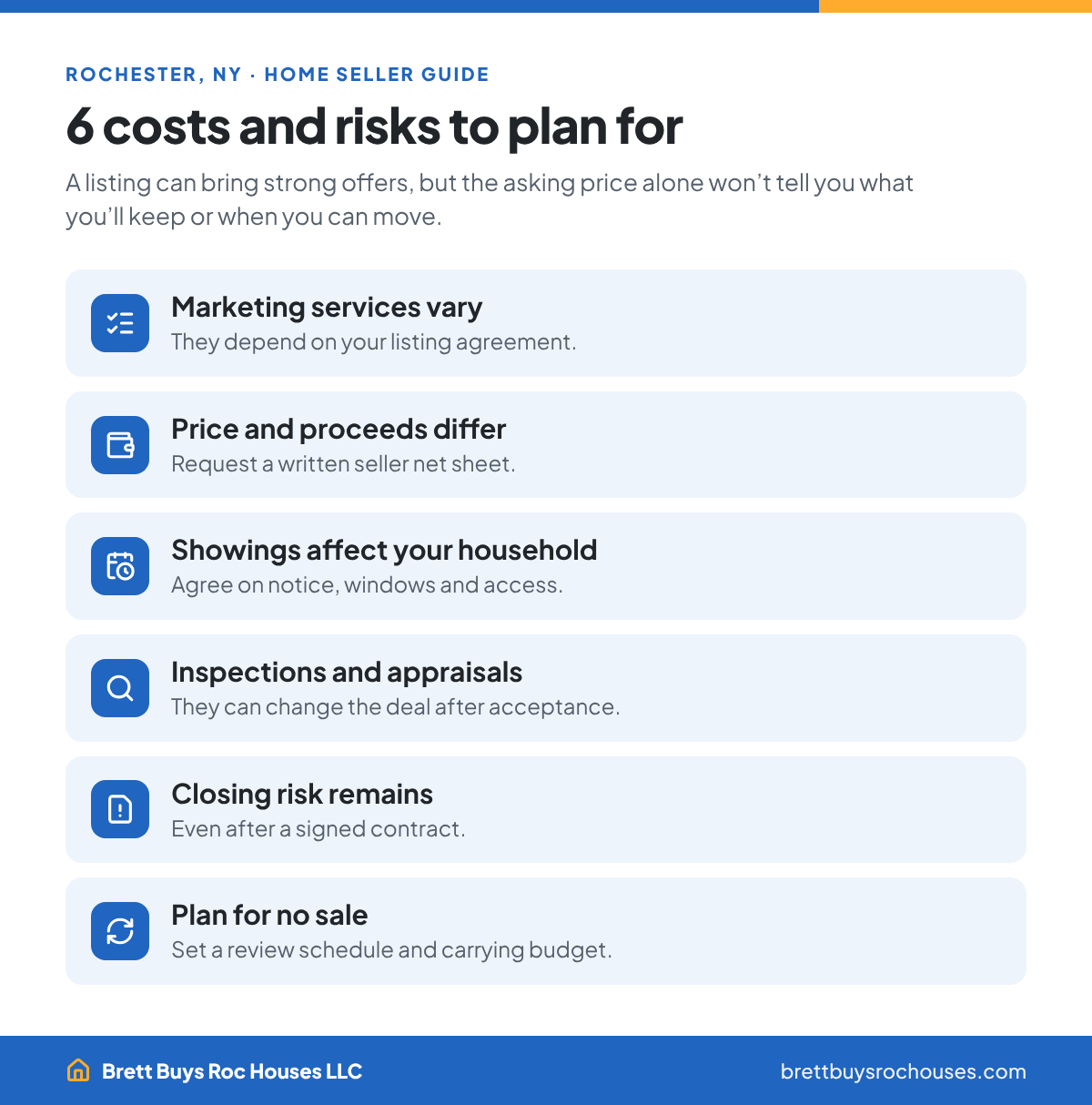
1. Marketing services depend on your listing agreement
Professional photos, online exposure, showings, and follow-up aren’t identical across every service package. A lower fee may come with fewer services, while a more comprehensive package may include work you’d otherwise arrange yourself.
Before signing, ask:
- Which photography, advertising, and listing services are included?
- Who pays for cleaning, staging, or extra marketing, and when?
- Who handles inquiries, showings, and offer negotiations?
- How often will I receive feedback and a recommendation on next steps?
Also review the agreement’s duration, cancellation terms, and when compensation becomes due. NAR’s guide to listing agreements explains the different arrangements and why the written scope matters.
The decision is whether the services justify their cost for your property. Ask for specifics you can compare.
2. Your sale price and your take-home proceeds are different numbers
A higher sale price can still leave you with less than expected once expenses are paid. Request a written seller net sheet that estimates what remains at several realistic sale prices.
Include agreed agent compensation, preparation costs, buyer credits, attorney and closing expenses, and the cost of keeping the property until it sells. Mortgage and lien payoffs also reduce the money available to you.
Commissions are negotiable; there is no mandatory percentage. Discuss any proposed payment toward a buyer’s agent separately and make sure your estimate reflects what you’ve actually agreed to pay.
Decide which repairs are worth funding
Before spending on a kitchen, roof, or major cleanout, compare the likely sale result with and without that work. Ask your agent which improvements address a buyer concern and which are unlikely to recover their cost.
You can also request an as-is pricing opinion. Listing as is remains an option even when you don’t want to renovate.
3. Showings need to work with your household
Showings can mean cleaning, securing personal belongings, arranging pet care, and leaving the house while buyers visit. That can be difficult around work, children, medical needs, or tenants.
Set expectations with your agent before the listing goes live. Agree on notice, appointment windows, access procedures, and how feedback will reach you.
If the property is occupied by tenants, discuss access and lease obligations with your attorney. Don’t promise unrestricted access or vacant possession without confirming what is possible.
More flexibility can make it easier for buyers to see the house. If managing access is a major burden, include that in your comparison with a direct sale that avoids public marketing and repeated showings.
4. Inspections and appraisals can change the deal
An accepted offer may still have conditions to satisfy. Inspection findings can lead to requests for repairs, a price reduction, or a credit, depending on the contract and applicable requirements.
An appraisal addresses value for the lender. If it comes in below the agreed price, the parties may need to discuss additional buyer funds, a price adjustment, or the options allowed by their contract.
You don’t automatically have to accept every repair request. Have your agent and attorney explain the choices and consequences before you agree to changes.
Selling as is still requires honest disclosure
An as-is sale doesn’t erase applicable disclosure duties. Under New York’s property condition disclosure law, covered sellers generally must provide the disclosure statement before the buyer signs a binding contract. Your attorney can confirm whether an exemption applies.
Gather repair records and disclose known conditions accurately. Addressing a concern early can help buyers evaluate the property before everyone spends more time on the transaction.
5. A signed contract does not remove every closing risk
Buyer financing, a home-sale contingency, title problems, missing payoff information, or estate issues can delay or prevent closing. A mortgage preapproval is useful, but it isn’t a final loan commitment.
Compare the buyer’s ability to perform as carefully as the offer amount. Review financing, deposits, contingencies, and the conditions that must be met before closing.
Cash removes the need for the buyer’s mortgage approval when the purchase is genuinely funded without one. It doesn’t resolve ownership disputes, liens, or other legal requirements. Ask for verifiable proof of funds and have your own attorney review the contract.
A Fairport lesson about comparing offers
In a Fairport seller’s experience we previously shared, another buyer offered $40,000 more than we did without visiting the house. The seller later contacted us after that buyer stopped communicating.
That example wasn’t about a listed sale, but the lesson applies to any offer: a larger number has value only if the buyer can complete the purchase on the agreed terms.
If foreclosure is involved, ask your attorney whether the Home Equity Theft Prevention Act, or HEPTA, applies. Covered transactions have specific contract, notice, and cancellation protections. Listing a house or signing a purchase agreement does not by itself stop an auction.
6. A listing needs a plan if the house does not sell
Listing provides exposure, not a guaranteed buyer or closing date. Discuss what you’ll do if inquiries are weak, showings don’t produce offers, or a buyer withdraws.
Ask for feedback that leads to a decision. Is the price supported by comparable sales? Do photos accurately present the house? Is access difficult? Are buyers repeatedly raising the same condition concern?
Set a regular review schedule and a budget for carrying the property. In Rochester, ongoing expenses can include insurance, taxes, utilities, snow removal, lawn care, and maintenance at an empty house.
Before changing agents or accepting a direct offer, review your existing agreement. An exclusive right-to-sell agreement can require compensation even if you find the buyer yourself. Ask your attorney about cancellation and any obligations that survive expiration.
Common mistakes when deciding whether to list
- Choosing an agent mainly because they suggest the highest asking price. Ask for the comparable sales and strategy behind that number.
- Spending on renovations before comparing an as-is sale. Get written estimates and consider the time required.
- Treating every offer as equally dependable. Review the conditions and the buyer’s ability to close.
- Comparing gross prices while leaving out holding costs, credits, or expenses you’ve already committed to pay.
A Rochester selling scenario with the numbers laid out
Imagine a homeowner comparing a prepared retail listing with an as-is direct sale. These figures are hypothetical, not local averages, a property valuation, or an offer from our company.
The listing plan includes $12,000 of preparation and three months of carrying expenses. The direct-sale plan assumes no repairs and one month of carrying expenses. Both use an illustrative $1,500 monthly carrying budget.
| Item | Prepared listing | Direct as-is sale |
|---|---|---|
| Sale price | $275,000 | $235,000 |
| Preparation and repairs | $12,000 | $0 |
| Agreed agent compensation | $13,750 | $0 |
| Buyer credits | $5,000 | $0 |
| Other seller closing expenses | $4,500 | $2,500 |
| Carrying expenses | $4,500 | $1,500 |
| Remaining before mortgage and lien payoffs | $235,250 | $231,000 |
The listing produces $4,250 more in this example, despite a $40,000 difference in sale price. That extra amount may justify the preparation and time for one seller. Another may prefer avoiding the work and upfront spending.
The 5% compensation used here is an example, not a standard rate. The direct-sale column assumes no agent compensation is owed. Actual expenses depend on your agreements; mortgage and lien payoffs and any applicable income taxes are excluded.
If the listed sale price drops by $10,000, with compensation still calculated at 5% and other assumptions unchanged, its remaining proceeds fall to $225,750. This is why it helps to compare a realistic range of outcomes.
How to compare listing with a direct offer
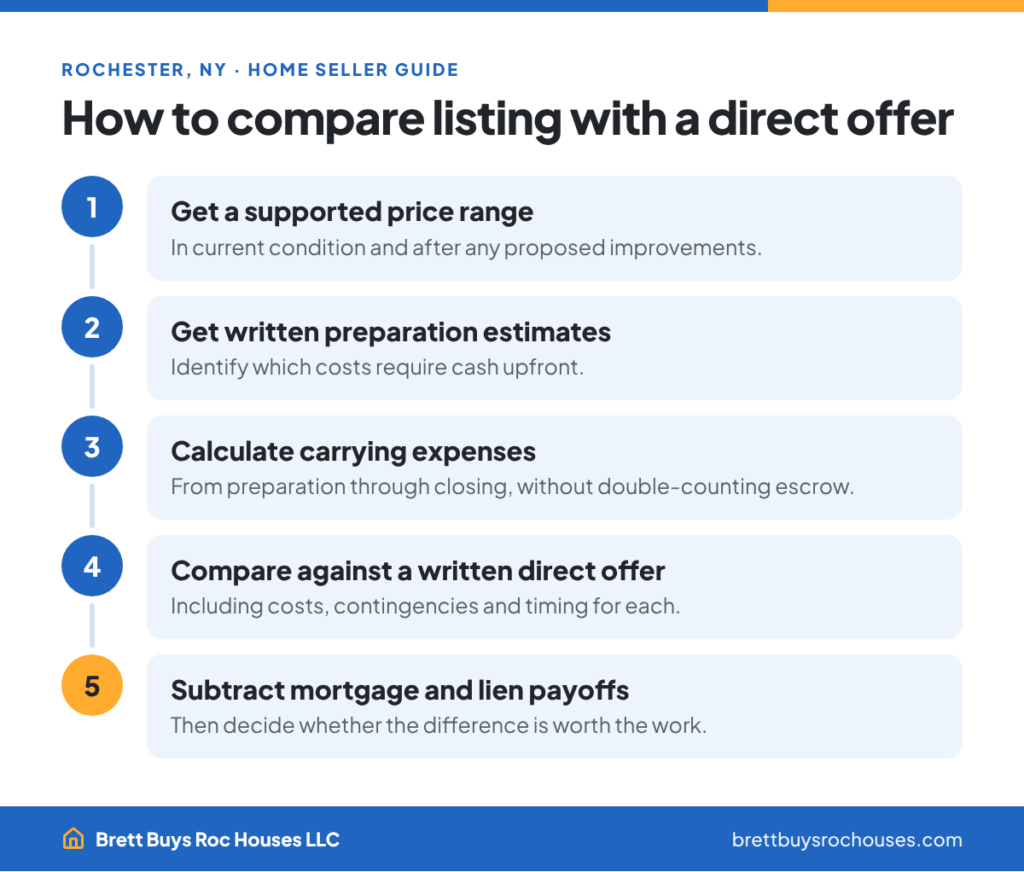
- Ask an agent for a supported price range in the home’s current condition and after any proposed improvements.
- Get written preparation estimates and identify which costs require cash upfront.
- Calculate carrying expenses for the full period from preparation through closing. Avoid counting escrowed taxes and insurance twice.
- Compare the listing estimate with a written direct offer, including costs, contingencies, and timing for each.
- Subtract mortgage and lien payoffs to estimate your available cash, then decide whether the expected difference is worth the work and uncertainty.
Listing may be the better fit when the home appeals to retail buyers and you have the budget and flexibility to complete that process. A direct sale may fit when repairs, repeated showings, or managing the property are the bigger problem.
Our homeowner resource library offers more information to help you compare your situation and prepare questions for the professionals involved.
Questions homeowners ask before listing in Rochester
Do I have to repair everything before listing my house
No. You can list as is or make selected improvements. Consider the likely return, your available cash, and whether the property’s condition could affect buyer financing. Applicable disclosure requirements still apply.
Can I negotiate real estate commissions
Yes. Compensation is negotiable and should be agreed to in writing. Compare the services included, any separate charges, and proposed buyer-agent compensation when evaluating the total cost.
Is a cash offer always better than listing
No. A successful listing may produce more money. A direct cash sale may reduce preparation and financing complications, but the price, terms, buyer’s reliability, and remaining legal requirements still matter.
Can I sell directly after I have signed a listing agreement
Possibly, but review the agreement with your agent and attorney first. You may still owe compensation or need to address other contractual obligations. Finding a buyer yourself doesn’t automatically cancel the agreement.
Get a clear comparison before you commit
At Brett Buys Roc Houses LLC, we visit the property before making an offer and provide proof of funds with our contracts. We’ll explain our purchase option so you can compare it with listing. We aren’t always the highest-price option.
Our local track record includes more than 100 five-star Google reviews, BBB accreditation with an A+ rating, and Greater Rochester Chamber of Commerce membership.
If you’re weighing how to sell your house in Rochester NY, call 585-299-9709 or review how our buying process works. Tell us about the house and your priorities. There’s no obligation to accept an offer.