
The most useful questions to ask a home buyer in Rochester NY concern the details of your sale: who makes decisions, what still needs approval, who needs access, and exactly what happens when you move out. Ask these questions during the property visit, then have the important answers reflected in the agreement your attorney reviews.
After 15+ years of working with Rochester homeowners, I encourage sellers to bring their own questions to a walkthrough. You should leave knowing what the buyer has committed to, what is still undecided, and who will get back to you.
Prepare a short list before the buyer arrives
Walk through the house with your own needs in mind. You may want to keep the dining room light fixture, leave a workbench in the basement, or schedule visits around someone who works nights. Mention these details while the buyer can see what you mean.
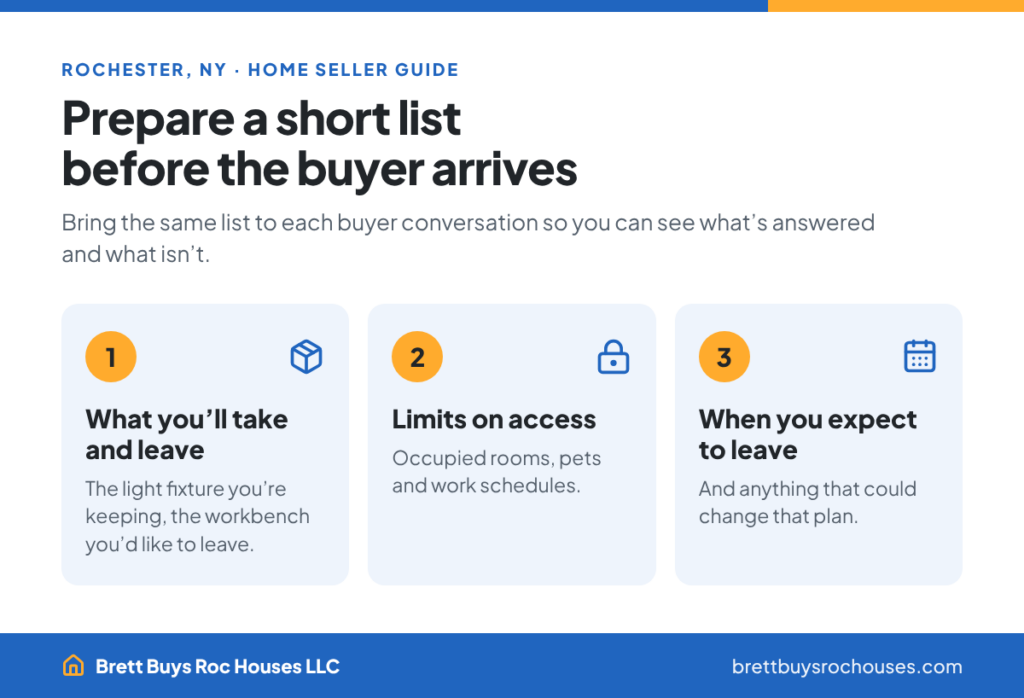
Write down three things before the appointment:
- What you intend to take and what you would like to leave.
- Any limits on access, including occupied rooms, pets, and work schedules.
- When you expect to leave the property and anything that could change that plan.
Bring the same list to each buyer conversation. That makes it easier to notice which questions have been answered and which still need attention.
Seven questions to ask during the property walkthrough
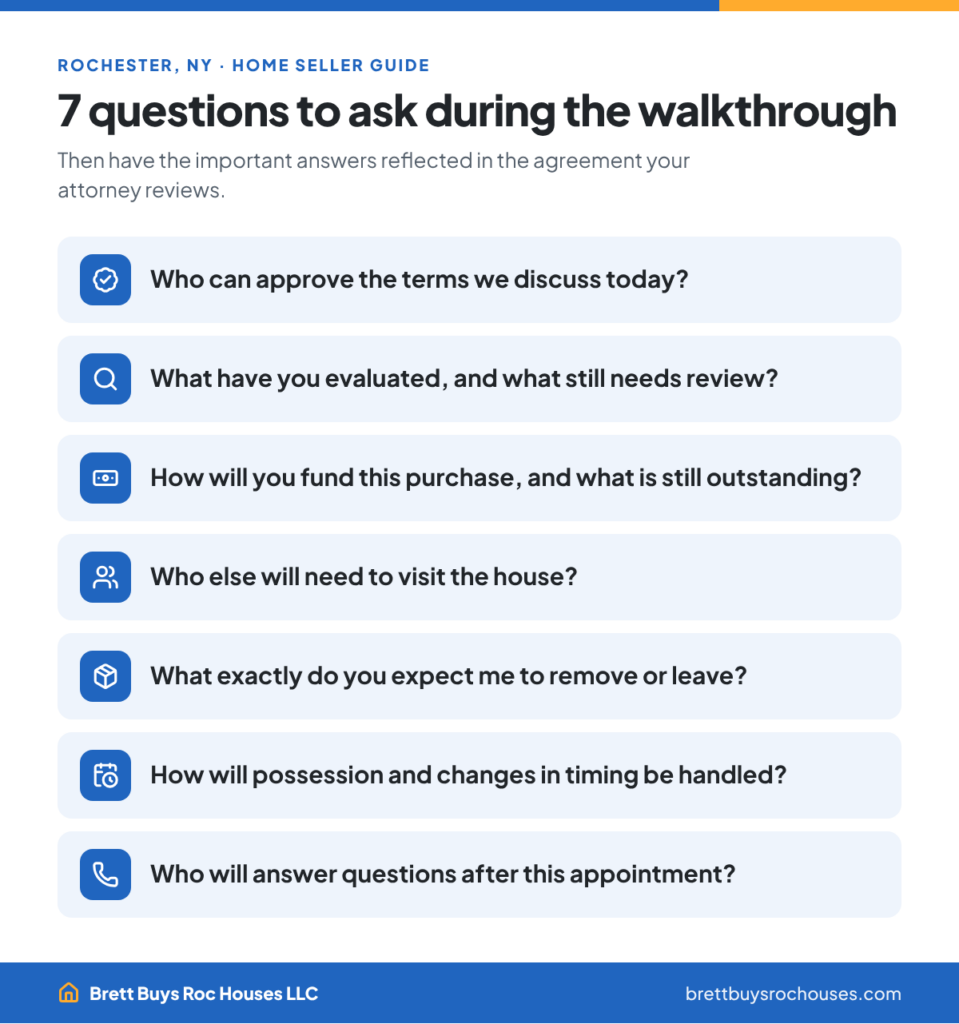
1. Who can approve the terms we discuss today
Ask whether the person visiting can approve the purchase terms or needs a manager, partner, or another buyer to agree. Get the name of the person responsible for the next step.
For example, if someone says you can leave certain belongings, ask whether that is an approved condition of the purchase or a request they still need to clear. Both answers can be useful, provided you know which one you have.
2. What have you evaluated and what still needs review
Find out whether the visit completes the buyer’s property evaluation or whether a contractor, inspector, lender, or partner still needs to look at something.
Be specific: “You looked at the furnace today. Will someone else need to evaluate it before you can commit?” Ask when that review will happen and how its findings could affect the proposed terms.
A buyer who identifies an unresolved issue gives you something concrete to discuss. Record the issue, the person handling it, and the expected response date.
3. How will you fund this purchase and what is still outstanding
Ask for the funding documents that support this particular purchase. A cash buyer should be able to explain whose funds will be used and provide evidence for your attorney to review. If financing is involved, ask what approvals remain and what deadlines the contract would set.
A lender’s preapproval letter can be helpful, but the Consumer Financial Protection Bureau explains that it is not a guaranteed loan offer. The useful follow-up question is: “What has already been verified, and what still has to happen?”
4. Who else will need to visit the house
Ask who may need access after the first walkthrough, why they need it, and how appointments will be arranged. Clarify whether the buyer expects further inspections, contractor estimates, or visits from a possible purchasing partner.
Agree on notice, supervision, and any rooms or times that need special handling. Avoid promising unrestricted access when you still live in the property. Ask your attorney to review any access rights in the agreement.
5. What exactly do you expect me to remove or leave
Walk through the garage, attic, basement, and outdoor areas together. Point out specific items instead of relying on a phrase such as “leave whatever you want.”
Ask whether an agreed cleanout has exclusions. For fixtures or belongings you intend to keep, have the agreement identify them clearly. Photos can help everyone recognize the items, while your attorney can advise how to incorporate the arrangement into the documents.
Also ask what condition the buyer expects at the final walkthrough. That helps you plan the work you have actually agreed to do.
6. How will possession and changes in timing be handled
Ask whether the buyer expects possession at closing or would consider a separate move-out arrangement. Clarify whether a proposed closing date is an estimate and how either side would request an extension.
If you need to remain after closing, raise that before committing. Have your attorney address the occupancy period, any charges or deposit, utilities, insurance, responsibility for damage, and the handover of keys.
An offer to “work with your schedule” still needs enough detail for you to arrange movers and your next place to live.
7. Who will answer questions after this appointment
Ask for your main contact, a backup contact, and an agreed way to receive updates. Find out who can approve a change if the person visiting will hand the file to someone else.
Try a practical question: “If I need to change the move-out arrangement, who should I contact, and how would we document it?” The answer should explain the process without promising that every request will be approved.
Turn the answers into a decision you can review
After the appointment, separate confirmed arrangements from open questions. You can do this on one sheet of paper:
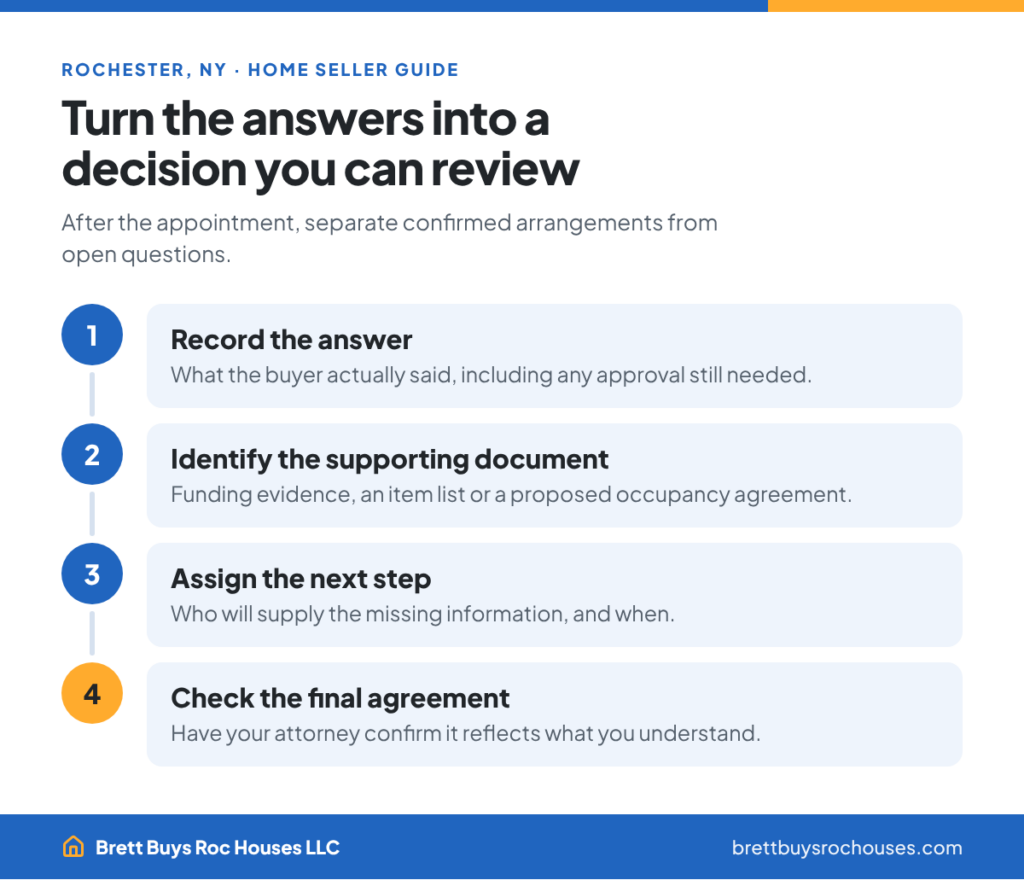
- Record the answer. Write what the buyer actually said, including any condition or approval still needed.
- Identify the supporting document. Funding evidence, an item list, or a proposed occupancy agreement should support the relevant answer.
- Assign the next step. Note who will supply the missing information and when you expect it.
- Check the final agreement. Ask your own attorney to review whether the written terms reflect what you understand before you sign.
Keep unresolved items visible. A friendly discussion can move the process forward, but “we’ll figure that out later” leaves you without an arrangement you can plan around.
Common mistakes during a buyer meeting
- Asking only about price and speed, then discovering that the required move-out terms do not work.
- Assuming the person giving an answer has authority to approve it.
- Discussing a cleanout without identifying the actual belongings involved.
- Leaving an open question without naming who will answer it.
- Relying on meeting notes without checking whether the final contract says the same thing.
You can ask for clarification without rejecting a buyer. The goal is to resolve the details that would otherwise become problems after you have committed.
A hypothetical walkthrough where the moving details decide the next step
Imagine a Rochester homeowner who needs ten days after closing to finish moving and wants to leave a heavy basement workbench. This is an illustration, not a past client transaction.
During the walkthrough, the buyer says the schedule should be workable. The seller asks who can approve it and what must be documented. The buyer confirms that the workbench can stay, but explains that the extra occupancy needs a separate agreement.
The seller’s next step is to have an attorney review that proposed arrangement before accepting the purchase terms. The conversation has produced a clear item to resolve, rather than an assumption that the moving plans are settled.
If the occupancy terms do not work, the seller can reconsider before signing. The benefit of these questions is an informed decision about whether the transaction fits.
Questions about preparing for a buyer walkthrough
Should I send my questions before the appointment
Yes. Sending your main concerns in advance gives the buyer a chance to bring the right information or decision-maker. You can still add questions as you walk through the property together.
What should I do if the buyer cannot answer something
Ask who can answer it, what information they need, and when they will respond. Some questions require a contractor, lender, or attorney. Keep the issue open until you have enough information to make your decision.
How do I confirm that an item can stay in the house
Identify the item precisely and ask for written agreement. A description and photo can prevent confusion about which workbench, appliance, or other belonging you mean. Have your attorney confirm that the sale documents reflect the arrangement.
Can I ask for time to review the answers before signing
Yes. Ask when the offer expires and arrange enough time to review the documents with your attorney. If the requested timing does not allow you to understand the terms, discuss an extension before committing.
Bring your questions to our property visit
At Brett Buys Roc Houses LLC, we visit the property before making an offer and provide proof of funds with every contract. Tell us about the details that matter to you, including access, belongings, and your move.
You can review our seller testimonials, 100+ Google reviews, and A+ BBB rating, then bring your own questions about how we would handle your property.
Call 585-299-9709 or read how our buying process works before arranging a visit. There is no obligation to sell.
If your buyer interviews lead to several written proposals, our guide to comparing multiple offers on a Rochester home covers that next decision.