

Yes, you can sell a house with water damage in Rochester, New York. You can repair the damage and list the home, list it in its current condition, or sell it directly to a buyer who is prepared to handle the work. Water damage does not make a home impossible to sell, but it can change which buyers are able to purchase it, how they calculate value, and what must happen before closing.
In nearly two decades of working with real estate and difficult homes, I have seen small leaks turn into large problems. Water may be moving behind a wall or under a floor long before the damage is easy to see. I have also seen sellers pay for repairs without knowing if that money would come back to them in the sale.
The best first step is not to panic or cover up the stain. It is to understand the source, stop any active water, document what happened, and compare your real selling options.
The Source of the Water Matters
Not all water damage is the same. A repaired supply-line leak under a sink is different from years of basement seepage. A roof leak is different from a sewer backup. Floodwater can create different cleanup, insurance, and disclosure questions than water from a broken pipe.
Common causes in Rochester-area homes include frozen pipes, roof leaks, winter ice dams, failed sump pumps, sewer backups, and basement seepage after heavy rain or snowmelt. Water may also enter around old windows or foundation walls. Poor grading can push even more water toward the house.
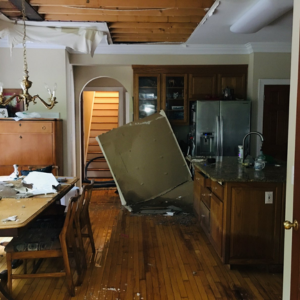
The visible stain may only be part of the problem. Water can move through insulation, floors, drywall, and framing. That is one reason we do not make firm offers on damaged houses sight unseen. Photos help, but they cannot show a soft floor, rotting wood, or moisture trapped behind a finished basement wall.
What Should You Do Before Trying to Sell?
If the water problem is active, protecting people and stopping more damage come first. A live electrical hazard, sewage, a damaged structure, or contaminated floodwater should be handled by the right professional. Once the property is safe, a few practical steps can make every selling option easier to compare.
Identify and stop the source
Drying the room will not solve the problem if water is still entering the house. Find out whether the cause is plumbing, roofing, drainage, groundwater, an appliance, or a sewer line. If the source is not obvious, a plumber, roofer, water-mitigation company, or other qualified professional may be needed.
Dry wet materials quickly
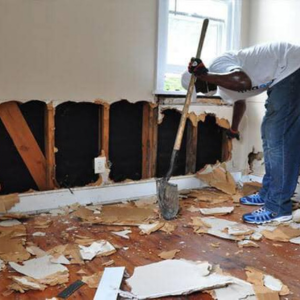
The U.S. Environmental Protection Agency recommends drying water-damaged areas and materials within 24 to 48 hours when possible to reduce the chance of mold growth. That does not mean every wet item can be saved. Drywall, carpet padding, insulation, and other porous materials may need to be removed when they cannot be dried fully or safely.
For more detail about mold and its effect on a sale, read our guide to selling a house with mold in Rochester, NY.
Save your records
Keep photos, videos, insurance communications, paid invoices, inspection reports, drying logs, mold testing, warranties, and repair receipts. Good records help explain what happened and what was done. They can also help your attorney, agent, buyer, inspector, or insurance professional understand the history without guessing.
Do not make cosmetic repairs too early
Fresh paint can make a room look better, but it does not correct an active moisture problem. Painting over a stain before the source is fixed can create more concern later, especially when an inspector finds elevated moisture or damage behind the surface. Solve the cause first. Then decide whether a full repair makes financial sense.
How Water Damage Can Affect a Traditional Sale
A retail buyer is not only deciding whether they like the house. Their lender, appraiser, inspector, and insurance company may also have questions. Active leaks, unsafe conditions, damaged walls or floors, visible mold, and unresolved structural concerns can cause a buyer to request repairs, ask for a credit, reduce the price, or cancel under a contract contingency.
Financing can also narrow the buyer pool. Some homes can still qualify for a standard mortgage. Others may need repairs before the lender approves the loan or the buyer can get insurance. The result depends on the damage, the loan program, the appraisal, and the lender’s rules.
This does not mean you should assume the home cannot be listed. A repaired leak with clear documentation may be manageable. A basement with ongoing water entry, widespread mold, damaged mechanical systems, or compromised framing is a different situation.
The important number is not simply the highest possible listing price. It is what you are likely to keep after repairs, commissions, credits, holding costs, and the risk of a deal falling apart.
Should You Repair the Water Damage or Sell the House As-Is?
There is no single answer for every homeowner. Look at the damage, repair cost, time, cash needed, and what the work may add to your net proceeds.
Repairing before listing may make sense
Repairs can be a good choice when the source is known, the wet area is small, and the work is likely to open the home to more financed buyers. You also need enough time and cash to manage contractors, cleanup, and surprises. A written estimate is helpful, but hidden damage can still change the final bill.
Selling as-is may make more sense
An as-is sale may fit better when water is still entering the home, damage has spread, or mold and sewage cleanup may be needed. It can also make sense when you cannot safely pay for the work, the home is vacant or inherited, or you need a more certain sale with fewer steps.
Selling as-is does not automatically mean giving the house away. It means the buyer, not the seller, accepts the cost, work, and risk that remain. That transfer of responsibility affects the offer. To understand the math, see how cash buyers calculate as-is home offers.
New York Water-Damage Disclosure Rules Sellers Should Know
Selling a property as-is does not erase a seller’s disclosure duties.
For many one-to-four-family residential sales, unless a legal exemption applies, New York Real Property Law requires the seller to complete a Property Condition Disclosure Statement and deliver it before the buyer signs a binding contract. The law also allows homes to be sold as-is. Those are two separate ideas. The buyer may accept the property’s current condition, but the seller still needs to answer applicable disclosure questions honestly based on actual knowledge.
The current New York form asks detailed questions related to:
- FEMA floodplains and flood-hazard areas
- Flood-insurance requirements and existing policies
- Prior flood assistance and flood-damage insurance claims
- Indoor mold testing
- Rot or water damage to the structure
- Standing water caused by drainage or grading problems
- Water penetration from seepage or natural flooding
- Known defects in plumbing, sump pumps, foundations, walls, ceilings, and floors
The form is not a warranty and does not replace the buyer’s inspection. Still, a knowingly false or incomplete answer can lead to a claim. New York law says a willful failure to follow these rules may make a seller liable for the buyer’s actual damages.
Every transaction is different, and exemptions can apply. Your New York real estate attorney should guide you on the form, the contract, and how to describe known repairs or damage. This article is general information, not legal advice.
Will Homeowners Insurance Pay for the Damage?
It depends on the source of the water and the exact policy. A sudden plumbing loss may be treated differently from groundwater, a long-term leak, poor maintenance, or surface flooding.
The New York State Department of Financial Services explains that standard homeowners insurance generally excludes flooding, while sewer or sump-pump backup coverage may be available through a separate endorsement. FEMA also advises that most homeowners policies do not cover flood damage and that flood insurance is normally a separate policy.
Before removing large areas or authorizing expensive work, contact your insurance company or agent and ask what documentation they require. Do not assume that all water damage is covered or that an open claim will automatically pay the full repair cost. Deductibles, limits, exclusions, depreciation, and the cause of loss can all affect the result.
If a claim has already been opened, keep the estimate, payment record, photos, and scope of work. Your attorney and insurance professional can explain how an unresolved claim or payment should be handled during the sale.
Three Ways to Sell a Water-Damaged House
1. Repair the property and list it normally
This path may produce the highest gross price when repairs are well planned and the home becomes safe, dry, and mortgage-ready. It also requires the most upfront money and project management. Leave room in the budget for hidden damage because the first estimate is not always the final cost.
2. List the house as-is on the open market
An agent can market a damaged property to contractors, investors, and buyers using renovation financing or cash. This may create competition, but showings, inspections, financing, and renegotiation can still affect the timeline. Ask the agent for realistic comparable sales involving homes in similar condition, not only renovated houses nearby.
3. Sell directly to a local cash buyer
A direct buyer can purchase the property in its current condition and take responsibility for repairs after closing. This can be useful when the damage is serious, the house cannot qualify for ordinary financing, or the seller does not want to manage cleanup and contractors.
The tradeoff is that a direct offer reflects repairs, holding costs, resale expenses, and risk. Compare the net result and the terms, not only the headline price. Our broader guide to selling a house as-is for cash explains that option in more detail.
Be Careful With Sight-Unseen Offers
Water damage creates uncertainty, and uncertainty is where unrealistic offers often begin. A buyer may quote a high number using a few photos, lock the property under contract, and then reduce the price after an inspection. Another buyer may never have intended to purchase the home and may only be trying to assign the contract to someone else.
Before signing, ask direct questions:
- Has the buyer personally inspected the damaged areas?
- Will the named company purchase the house itself?
- Can the buyer provide current proof of funds?
- What contract terms allow the price to change?
- Is the offer based on known repair assumptions?
- Who pays which closing costs?
- What could delay or cancel the sale?
- Can you speak with your own attorney before moving forward?
At Brett Buys Roc Houses LLC, we inspect properties in person because we want to make an offer we can stand behind. Water damage is exactly the type of problem that cannot be priced honestly from a call center or an online form.
How a Buyer Evaluates a Water-Damaged Property
A serious buyer will look beyond the visible stain. The evaluation may include the source of the water, whether it is active, how long it has been present, which materials were affected, signs of mold or rot, the condition of the roof and foundation, drainage, plumbing, electrical exposure, and the cost of making the home safe and marketable.
The neighborhood still matters. So do the home’s size, layout, lot, and likely value after repair. A direct offer is usually based on that future value, minus repair costs, selling costs, holding costs, and risk.
That is why two houses with similar basement stains can receive very different estimates. One may need grading and a dehumidifier. The other may need excavation, foundation work, mold remediation, and a full basement rebuild.
A Practical Way to Choose Your Best Option
Before deciding, get enough information to compare the paths honestly. Ask for at least one professional repair opinion when practical. Speak with an experienced local real estate agent about the likely as-is and repaired listing outcomes. If you are considering a direct sale, meet the buyer, request proof of funds, and review the written terms with your attorney.
Then compare:
- Expected net proceeds after all costs
- Cash required before the sale
- Time until the property is likely to close
- Risk of repair overruns or buyer financing problems
- Work you will personally need to manage
- Certainty that the buyer can complete the purchase
The best option is the one that fits your finances, timeline, and tolerance for risk. For some sellers, repairing and listing is worth the effort. For others, transferring the problem to an experienced buyer is the more practical decision.
Frequently Asked Questions
Can I sell a house with active water damage in Rochester, NY?
Yes. An active problem will narrow the buyer pool and may prevent some mortgage-financed sales, but an as-is buyer may still purchase the property. The source and known condition should be disclosed as required, and the buyer should inspect the home before making a dependable offer.
Do I have to repair water damage before selling in New York?
Not always. New York law allows parties to agree to an as-is sale. However, selling as-is does not remove applicable disclosure duties. Ask your attorney what the law and your contract require in your situation.
How much does water damage lower a home’s value?
There is no standard percentage. The impact depends on the source, whether the issue is active, the amount of damaged material, mold or structural concerns, repair costs, available financing, and local demand. A small documented repair is very different from repeated basement flooding.
Can a buyer get a mortgage on a water-damaged house?
Sometimes. Minor or repaired damage may not prevent financing. Active leaks, unsafe conditions, structural damage, or serious moisture problems may lead the appraiser, lender, or insurer to require more information or repairs before closing.
Does homeowners insurance cover water damage?
Coverage depends on the cause and policy. Standard homeowners insurance generally does not cover flooding, and sewer or sump-pump backup may require added coverage. Ask the insurance company to review the specific loss and policy language.
Can I sell a water-damaged house without cleaning it out?
Some direct buyers will purchase a house with damaged materials and unwanted belongings still inside. Confirm in writing what can remain, who handles removal, and whether cleanup affects the offer.
Talk With a Local Rochester Buyer Before Spending Thousands
If you are unsure whether to repair the damage, list the property, or sell it as-is, we can walk through the house and explain what we see. We will not make a firm offer without seeing the property, and we will not tell you a direct sale is the best choice if the numbers point somewhere else.
Brett Buys Roc Houses LLC is a local Rochester business with 123+ public five-star Google reviews and an A+ Better Business Bureau rating. We provide proof of funds, use New York attorneys, and explain how we reached our offer so you can compare it with your other options.
Call (585) 299-9709 or visit our page about selling a house with water damage in New York for a straightforward, no-pressure conversation.