
If you can’t sell your house in Rochester, NY, the problem usually comes down to one of three things: price, condition, or buyer demand. The right next step depends on your timeline, your budget, and how much work you are willing to take on before selling.
Some homeowners can solve the problem by adjusting the price or making a few strategic repairs. Others decide the simplest option is to stop chasing the traditional market and sell the property as-is. The key is identifying what is actually blocking the sale before you spend more time or money.
Why Some Homes Struggle to Sell in Rochester
When a property sits without serious offers, there is usually a clear reason behind it. In Rochester, older housing stock, repair needs, financing issues, and changing buyer expectations can all make a home harder to sell.
- The property needs repairs or major updates
- The price is higher than what buyers expect
- The home has been sitting on the market too long
- Financing problems from potential buyers
- Market conditions shifting in the local area
- Title issues or liens attached to the property
Many traditional buyers prefer homes that are move-in ready, which means properties needing repairs or improvements may receive fewer offers.
What to Do If You Can’t Sell Your House in Rochester, NY
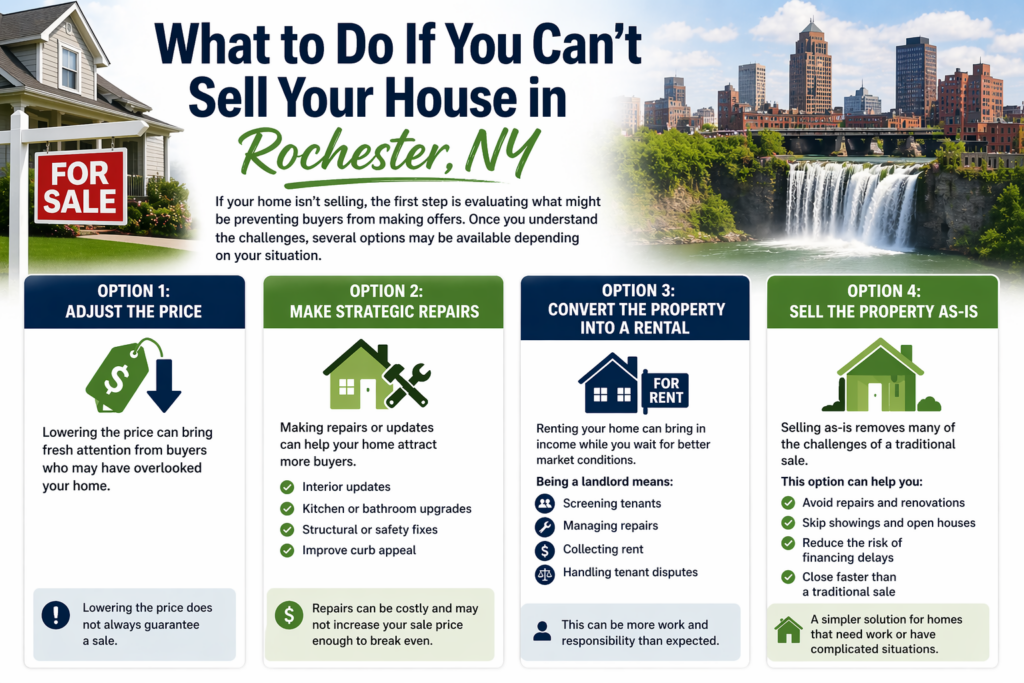
If your home isn’t selling, the first step is evaluating what might be preventing buyers from making offers. Once you understand the challenges, several options may be available depending on your situation.
Option 1: Adjust the Price
One of the most common strategies when a home isn’t selling is lowering the asking price. If a property is priced above what buyers expect, it may get overlooked entirely. A price adjustment can help bring fresh attention from buyers who previously passed on it.
However, lowering the price does not always guarantee a sale, especially if repairs or other issues remain.
Option 2: Make Strategic Repairs
Another option is investing in repairs or improvements before listing the home again. Common upgrades that sometimes help homes sell include:
- Interior updates such as paint or flooring
- Kitchen or bathroom improvements
- Addressing structural or safety issues
- Improving curb appeal
While these upgrades may attract more buyers, renovation costs can add up quickly and there is no guarantee they will increase the final sale price enough to offset the investment.
Option 3: Convert the Property Into a Rental
Some homeowners choose to keep the property and rent it out instead of selling. If the market isn’t favorable, renting can provide income while waiting for better conditions.
However, becoming a landlord comes with responsibilities such as:
- Screening tenants
- Managing repairs and maintenance
- Collecting rent
- Handling tenant disputes
For some homeowners, this can be more work than expected.
Option 4: Sell the Property As-Is
If time, repairs, or uncertainty are major concerns, selling the home as-is is another route to consider. This approach removes many of the challenges tied to traditional listings.
This option may allow homeowners to:
- Avoid repairs and renovations
- Skip showings and open houses
- Reduce the risk of financing delays
- Close faster than a traditional sale
For properties that need work or have complicated situations, this approach can sometimes provide a simpler solution.
Understanding Why the Home Isn’t Selling
Before deciding what to do next, it’s important to identify the real reason the property hasn’t sold. In most cases, it comes down to three key factors:
- Price
- Property condition
- Buyer demand in the market
Once these are clear, it becomes easier to decide which option makes the most sense for their goals.
A Local Option for Rochester Homeowners
At Brett Buys Roc Houses, we work with homeowners across Rochester facing situations where traditional listings haven’t worked. Many of these properties need repairs, involve unique circumstances, or simply didn’t attract buyers on the market.
Our goal is to provide homeowners with clear information and a straightforward option so they can decide what works best for their situation.
Final Thoughts
If your home isn’t selling, it doesn’t mean you’re out of options. There are multiple options available depending on your timeline, the condition of the property, and your financial goals. Understanding these options can help you avoid unnecessary stress and move forward with a solution that fits your situation.
Frequently Asked Questions
Why can’t I sell my house in Rochester, NY?
Homes may struggle to sell due to pricing, property condition, market demand, or financing challenges with buyers. In many cases, homes that need repairs or updates take longer to sell through traditional listings.
How long does it normally take to sell a house in Rochester?
Traditional home sales can take anywhere from a few weeks to several months depending on the price, condition of the property, and market conditions at the time.
Should I lower my price if my house isn’t selling?
Lowering the price can attract new buyers, but it is not always the only solution. Sometimes repairs, timing, or exploring different selling options may also help.
Can I sell my house in Rochester without making repairs?
Yes. Some homeowners choose to sell their home as-is rather than investing in renovations. This allows them to avoid repair costs and potentially sell faster.
What are my options if my house won’t sell?
If your home isn’t selling, options may include lowering the price, making improvements, renting the property, or selling the home in its current condition.