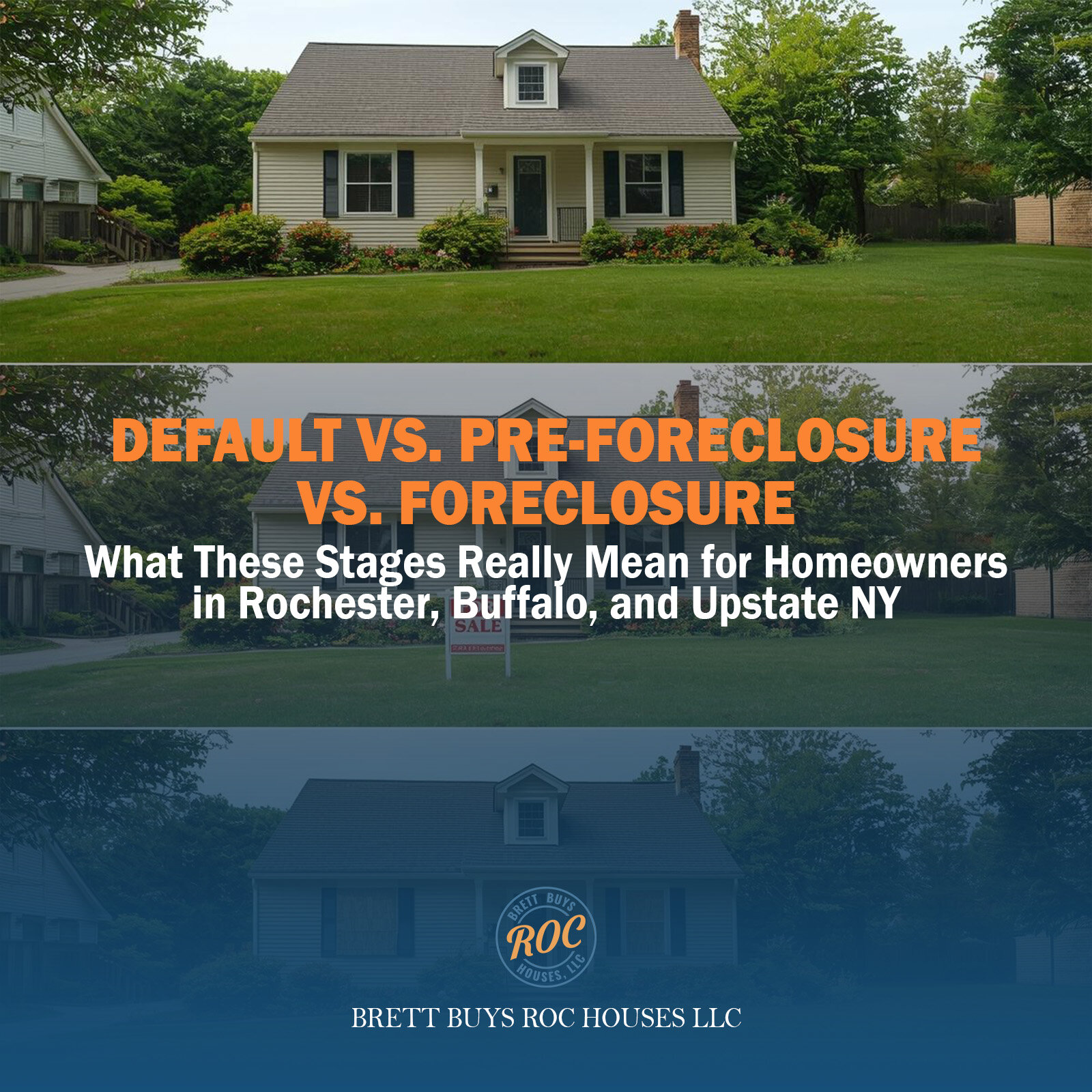

Why These Terms Matter More Than Most Homeowners Realize
If you’ve missed a mortgage payment or received letters from your lender, you may have heard terms like default, pre-foreclosure, or foreclosure—often used interchangeably.
They are not the same, and misunderstanding the difference can cost homeowners valuable time, leverage, and options.
In my 15+ years helping homeowners across Rochester, Buffalo, and Upstate New York, I’ve seen many people wait too long simply because they didn’t realize what stage they were actually in.
This guide breaks each phase down clearly—without legal jargon—so you know exactly where you stand and what options still exist.
Stage 1: Mortgage Default — The Warning Phase
A mortgage goes into default when you miss a payment according to the terms of your loan. This can happen after:
- One missed payment
- Multiple missed payments
- Failure to meet another loan obligation
What Homeowners Often Don’t Realize
At this stage:
- You are not in foreclosure
- You still have the most flexibility
- Lenders are typically still open to solutions
Default is the earliest and most recoverable phase—but it’s also the most commonly ignored.
Common Signs of Default
- Late notices
- Increased lender communication
- Fees added to your account
For homeowners in Upstate NY, this is often the best window to act strategically.
Stage 2: Pre-Foreclosure — The Legal Clock Starts
Pre-foreclosure begins when the lender formally notifies you that the loan is in default and legal action may follow if the issue isn’t resolved.
In New York, this usually includes:
- A Notice of Default or Demand Letter
- Required pre-foreclosure notices
- Referral to a foreclosure attorney
Key Reality Check
Pre-foreclosure does not mean you’ve lost your home—but it does mean the timeline is no longer casual.
At this stage:
- The lender is preparing legal action
- Options still exist—but deadlines now matter
- Delays reduce leverage
This is the stage where many homeowners mistakenly believe they still have “plenty of time.”
Stage 3: Foreclosure — The Court Process Begins
New York is a judicial foreclosure state, meaning foreclosure must go through the court system.
Foreclosure officially begins when:
- The lender files a lawsuit
- You are served legal paperwork
- The case enters the court calendar
What Changes at This Stage
- Timelines become structured
- Legal costs increase
- Resolution options narrow
That said, foreclosure is not immediate. Many homeowners still have options during this phase—but they require fast, informed action.
Why New York Is Different Than Other States
Unlike non-judicial states, New York foreclosures:
- Take longer
- Require court approval
- Involve mandatory notices and settlement conferences
This means homeowners in Rochester and Buffalo often have more time—but only if they use it wisely.
Waiting without a plan is what turns time into risk.
How Options Change at Each Stage
| Stage | Flexibility | Risk Level | Typical Options |
| Default | High | Low | Catch up payments, restructure, sell |
| Pre-Foreclosure | Medium | Moderate | Short sale, modification, strategic sale |
| Foreclosure | Limited | High | Legal defense, sell quickly, negotiate payoff |
Understanding where you are determines what makes sense next.
The Most Common Mistake Homeowners Make
The biggest mistake isn’t missing payments—it’s misjudging urgency.
Many homeowners wait until foreclosure feels “real,” not realizing:
- Options quietly disappear at each stage
- Buyers and lenders become less flexible
- Stress compounds decision-making
Early clarity leads to better outcomes—even if selling becomes the final decision.
How We Help Homeowners Understand Their Real Position
At Brett Buys Roc Houses LLC, we regularly speak with homeowners across Rochester, Buffalo, and Upstate NY who are unsure whether they’re in default, pre-foreclosure, or active foreclosure.
Our role is simple:
- Explain the stage clearly
- Outline realistic options
- Help homeowners understand timelines
Sometimes that leads to selling.
Sometimes it doesn’t.
But understanding the stage always comes first.
Frequently Asked Questions
Does default mean foreclosure is automatic?
No. Default is the earliest stage and the easiest to address.
Can I sell during pre-foreclosure?
Yes. Many homeowners do—often with better outcomes.
Is it too late once foreclosure starts?
Not always. But options are time-sensitive.
Does New York give homeowners more time?
Yes—but only if that time is used strategically.
Final Thought: Clarity Is the First Form of Protection
Default, pre-foreclosure, and foreclosure are not just labels—they are decision windows.
Knowing which one you’re in gives you control.
Ignoring it gives the timeline control over you.
If you’re unsure where you stand in Rochester, Buffalo, or anywhere in Upstate NY, getting clarity early can preserve options you don’t get back later.
Visit brettbuysrochouses.com. No pressure. Just honest guidance—before uncertainty turns into urgency.